
How are truck accidents different from car accidents?
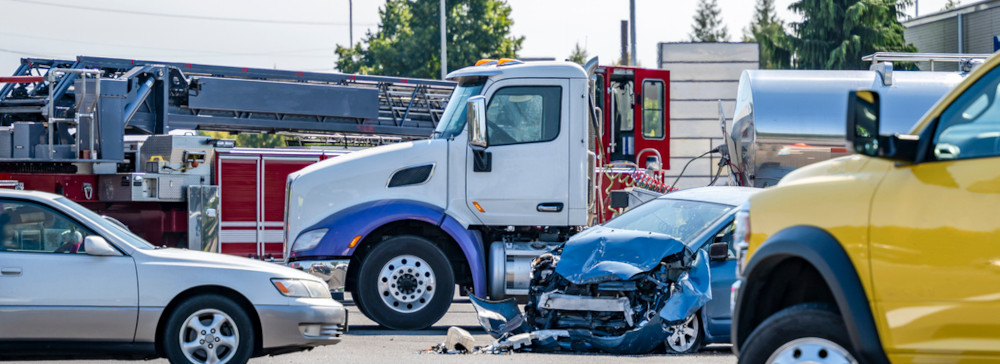
While all motor vehicle accidents raise legal questions, collisions involving commercial trucks often introduce a higher level of complexity than car accidents, and in many cases, the stakes are significantly higher. Although both fall under Texas personal injury law, claims arising from 18-wheelers, delivery trucks, and other commercial vehicles accidents are handled differently than standard car accident claims.
Knowing how truck accidents are different from car accidents can help you navigate the claims process and make informed decisions after a collision.
Several key differences to be aware of are outlined below.
Severity of Injuries

One of the most noticeable differences between commercial vehicle accidents and passenger car accidents stems from the size and weight of the vehicles involved. A typical passenger vehicle weighs roughly 4,000 pounds. By comparison, a fully loaded commercial truck can weigh up to 80,000 pounds under federal law. This massive disparity means that a “minor” truck accident is rare, as the force involved almost guarantees catastrophic damage.
Victims often face serious injuries, including:
- Traumatic Brain Injuries (TBI)
- Spinal cord damage and paralysis
- Internal organ failure
- Crush injuries requiring amputation
Passenger car accidents can also result in serious harm, particularly in high-speed or multi-vehicle crashes. However, injuries involving commercial vehicles are more likely to be catastrophic or permanent, which can influence how damages are assessed and documented under Texas law.
The Parties Involved Are More Complex in Truck Accident Claims
Most car accident cases involve two primary parties: the injured driver and the at-fault driver. Commercial vehicle and truck accidents, however, often involve multiple potentially liable entities, including:
- The truck driver
- The trucking company or motor carrier
- A third-party maintenance contractor
- A freight loader or shipping company
- A vehicle or parts manufacturer
Under Texas law, each of these parties may share responsibility depending on how the crash occurred. This creates a multi-layered liability analysis that does not exist in most passenger vehicle claims.
Commercial Vehicle Claims Are Governed by Additional Federal and State Regulations
Passenger car accidents are primarily evaluated under Texas traffic laws and general negligence standards. Commercial vehicle and truck accidents, however, are also subject to extensive federal and state regulations specific to the trucking industry.
Many of these rules are enforced by the Federal Motor Carrier Safety Administration (FMCSA) and address issues such as:
- Driver hours-of-service limits
- Mandatory rest periods
- Drug and alcohol testing
- Vehicle inspection and maintenance requirements
- Driver qualification and training standards
When these regulations are violated, they can serve as powerful evidence in a truck accident claim. Passenger vehicle cases rarely involve this level of regulatory oversight or compliance analysis.
Evidence Can Be More Detailed
Car accident claims typically rely on familiar evidence such as police reports, photographs, witness statements, and medical records. Commercial truck cases may involve those same materials but often also require additional documentation.
Depending on the circumstances, records related to driver schedules, maintenance history, or company safety practices may be reviewed. Collecting and analyzing this information can take more time, which is one reason truck accident claims may move at a different pace than standard car accident cases.
Insurance Coverage Is Significantly Higher and More Aggressively Defended
Texas requires commercial carriers to maintain significantly higher insurance limits than private citizens.
While this means there is more coverage available for your medical bills and lost wages, it also means the insurance companies fight ten times harder to protect their bottom line. Trucking insurers often deploy “rapid response teams” to the scene of a wreck within hours to gather evidence that favors the company. In a passenger car claim, you rarely face this level of immediate, corporate-funded opposition.
Contact D. Miller & Associates, PLLC For a Free Consultation Today

Whether an accident involves a passenger vehicle or a commercial truck, understanding your legal options is an important step after an injury. Each case presents its own challenges, and informed guidance can help ensure the claims process moves forward appropriately.
If you have questions following a wreck in Texas, a Houston personal injury lawyer can help explain your rights and ensure that corporate legal teams do not stand in the way of your recovery.