

If you’ve been hurt in a collision with an 18-wheeler, one of the first questions you’re probably asking is: what is my case worth? The honest answer is that no single “average” truck accident settlement figure reliably predicts what any individual case will recover. Every case turns on its own facts: what happened, who is responsible, and how the crash has changed your life.
What we can say is that 18-wheeler accident settlements in Texas tend to be significantly higher than settlements in typical car accident cases. The injuries are usually more severe, more parties may share responsibility, and the insurance policies involved are substantially larger.
With Texas ranking among the top states in the country for commercial truck registrations, serious collisions between passenger vehicles and 18-wheelers are an unavoidable reality on our roads, and the consequences for victims can be life-changing.
At D. Miller & Associates, PLLC, our Texas truck accident lawyers have recovered compensation for truck accident victims across the state. We know what drives settlement value and what can reduce it. Here’s a closer look.
Why There’s No True “Average” Truck Accident Settlement

When people ask about the average settlement for a semi-truck accident, they’re usually hoping for a ballpark number. But there is no true average for truck accidents in Texas, because no two cases are alike and the circumstances of each crash vary too widely for a single number to be meaningful.
Settlement value reflects the specific facts of your situation: the nature of your injuries, how they affect your life, who was at fault, and how much insurance coverage is available. A case involving a soft-tissue injury and a full recovery will resolve very differently from one involving a traumatic brain injury, a spinal cord injury, or a death.
That said, general ranges can still provide helpful context. Settlements may start as low as a few thousand dollars for minor injuries, while catastrophic cases involving traumatic brain injuries or wrongful death can reach six or seven figures.
Citing an average without that context can be misleading. In some cases, it leads victims to accept far less than their case warrants. Rather than focusing on an average, the goal is a result that fully accounts for your medical needs, your financial losses, and the extent of the negligence involved.
Why Truck Settlements Are Often Higher Than Car Accident Settlements
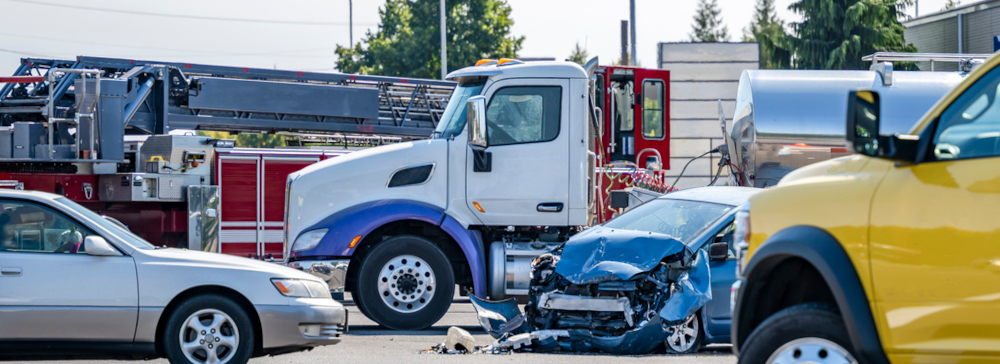
Commercial trucks are far larger and heavier than passenger vehicles, so the injuries they cause tend to be more serious. The trucking industry is also structured in ways that often create more complex claims and more available coverage.
Higher Insurance Minimums
Federal regulations require interstate motor carriers to carry substantial liability coverage. For general freight, the Federal Motor Carrier Safety Administration (FMCSA) minimum is $750,000. Carriers hauling oil or certain hazardous materials must carry $1 million to $5 million, and many carriers maintain limits above the minimum.
Trucks operating only within Texas are subject to state minimums instead, which can be lower. Either way, substantially more coverage is often available than in a typical car accident claim. Learn more about Texas trucking insurance requirements.
The MCS-90 Endorsement
For-hire interstate carriers must have an MCS-90 endorsement attached to their liability policy. It acts as a safety net for the public: if the insurer would otherwise deny coverage because of a policy exclusion or technicality, the MCS-90 can still require it to pay a final judgment up to the federal minimum.
Excess and Umbrella Coverage
On top of primary insurance, larger trucking fleets may carry excess or umbrella policies worth millions more. That additional layer can make a significant difference in the total value of a serious injury claim.
Multiple Liable Parties
Liability in an 18-wheeler crash rarely falls on the driver alone. Depending on the facts, responsible parties may include the trucking company, the truck or trailer owner, a cargo loading company, a maintenance contractor, or a manufacturer of a defective part. More liable parties often means access to more insurance coverage, so identifying every one of them is one of the most important steps in protecting the full value of your claim.
What Determines the Value of a Truck Accident Settlement?

Several variables shape what an 18-wheeler accident case may be worth. Some carry more weight than others, but all of them factor into how insurers and attorneys assess a claim.
The Severity and Long-Term Impact of Your Injuries
This is the single biggest driver of settlement value. Serious injuries such as fractures, internal organ damage, spinal cord injuries, and traumatic brain injuries bring higher medical costs, longer recoveries, and greater long-term effects on your ability to work and live your life. Cases involving permanent disability or disfigurement tend to produce the highest settlements because the damages extend far into the future.
Minor injuries with a full recovery, by contrast, carry lower settlement values because their measurable financial and personal impact is smaller.
Economic Damages
Economic damages are the documented financial losses tied to your injury, including:
- Past and future medical expenses
- Lost wages
- Reduced future earning capacity
- Ongoing rehabilitation or in-home care
In serious truck accident cases, future damages often far exceed what has already been spent. Projecting those costs accurately requires detailed documentation and, in many cases, input from medical and financial professionals.
Non-Economic Damages
Texas law allows truck accident victims to recover for losses that don’t come with a receipt, such as:
- Physical pain and suffering
- Mental anguish
- Physical impairment and disfigurement
- Loss of enjoyment of life
- Loss of consortium for a spouse or family member
These damages are harder to quantify, but they can make up a substantial portion of a settlement. Your age, occupation, the severity of ongoing symptoms, and how the injury has affected your relationships and daily activities all influence how they are assessed.
The Strength of the Liability Evidence
The clearer the evidence of fault, the stronger your negotiating position. FMCSA safety violations, hours-of-service breaches, black box (event data recorder) data, driver logs, maintenance records, and a DWI arrest at the scene can all establish the trucking company’s responsibility. Evidence gathered from the scene and the truck also shapes how economic damages are calculated and presented.
How Does Texas Law Affect Your Settlement?

Texas follows a modified comparative fault rule, called proportionate responsibility. If you are found partly responsible for the crash, your compensation is reduced by your percentage of fault. If you are found more than 50% at fault, you cannot recover at all.
For example, if a jury awards $500,000 but assigns you 20% of the fault, your recovery would be $400,000.
This is why the trucking company’s insurer will often try to shift blame onto the victim, even when the evidence doesn’t support it. Every statement you make, every piece of evidence that surfaces, and every procedural decision can affect how fault is ultimately assigned.
Timing matters too. In most Texas personal injury cases, you have two years from the date of the crash to file a lawsuit. Missing that deadline can bar your claim entirely, regardless of its value.
Does Going to Trial Change the Outcome?

Most truck accident cases in Texas settle before trial, but not all of them. When a trucking company or its insurer refuses to offer fair compensation, taking the case to a jury becomes the path forward. Jury verdicts in 18-wheeler cases can be substantial, particularly when the evidence shows serious safety failures.
In some cases, exemplary (punitive) damages may also be available. These are not meant to compensate the victim but to punish gross negligence, malice, or fraud, and Texas requires clear and convincing evidence to award them. Evidence of hours-of-service violations, falsified driver logs, or knowingly ignored maintenance can be especially significant in front of a jury.
A firm’s readiness to try a case often influences how seriously an insurer treats settlement negotiations.
What Can Reduce a Truck Accident Settlement?
Even strong cases face challenges. Insurers routinely look for reasons to reduce or deny claims, and several common pitfalls can lower what a case recovers:
- Delayed or interrupted medical treatment. Waiting weeks to see a doctor or skipping physical therapy lets the insurer argue the crash didn’t cause your injuries or that they aren’t as serious as claimed.
- Lost or overwritten evidence. Evidence in trucking cases is fragile. If the truck is repaired or its electronic data is overwritten before inspection, your case can lose significant leverage.
- Insufficient documentation. Without medical records, receipts, wage records, and witness statements, it is difficult to support a high-value demand.
- Recorded statements. Statements given to an insurance adjuster before speaking with an attorney can be used to minimize your injuries or shift fault.
- Comparative fault. Any percentage of fault assigned to you reduces your recovery.
- Settling too soon. Accepting an offer before the full extent of your injuries is known can lock in a number that doesn’t cover future care.
That last point deserves emphasis. Settling before you reach maximum medical improvement, the point at which your condition has stabilized, risks leaving out future treatment costs and long-term limitations. Once you accept a settlement, you generally cannot go back and ask for more, even if your condition gets worse.
How a Texas Truck Accident Attorney Can Help Maximize Your Settlement

Bringing in an attorney early can make a measurable difference. Trucking companies and their insurers often begin building their defense within hours of a crash, and negotiating without an attorney puts you at a significant disadvantage against well-resourced opponents.
An experienced truck accident lawyer can:
- Preserve evidence. Send preservation (spoliation) letters putting the trucking company on notice of its legal duty to retain black box data, GPS records, driver logs, and maintenance records before they are overwritten or destroyed.
- Coordinate a thorough investigation. Work with accident reconstruction experts and investigators to examine the physical evidence, electronic data, and witness accounts.
- Identify every liable party. Look beyond the driver to the carrier, owners, loaders, maintenance contractors, and manufacturers, and to every policy that may apply.
- Document your full damages. Work with medical and financial professionals to project future care, lost earning capacity, and long-term costs.
- Handle the insurers. Manage all communications and negotiations, and evaluate every offer against the full value of your losses.
With 66+ years of combined experience, more than 36,000 cases won, and over $650 million recovered in verdicts and settlements, the team at D. Miller & Associates builds every truck accident case from the ground up.
Hurt in an 18-Wheeler Accident in Texas? Schedule a Free Case Evaluation

We know how much is at stake for you and your family. The sooner you have legal representation, the better positioned your case will be.
Call us or contact us online to schedule a free, no-obligation case evaluation with a Texas truck accident lawyer at D. Miller & Associates, PLLC. We’ll help you understand the potential value of your claim and the best path to recovery. There’s no cost to talk, and you pay nothing unless we recover compensation for you.