

It takes skill, training, and experience to safely operate an 18-wheeler. When trucking companies hire unqualified drivers or fail to provide necessary training and supervision, these trucks can quickly become instruments of destruction.
If you have been injured by an unqualified driver on Texas roads, you may have a valid injury claim against the trucking company, the driver, and other potential negligent parties.
At D. Miller & Associates, we are highly familiar with truck driver qualifications under federal and Texas laws and can help you fight for the compensation you deserve. Our Texas truck accident lawyers are adept at identifying violations that may have contributed to a crash and establishing liability against all responsible parties.
A Clear and Present Danger on Texas Roads
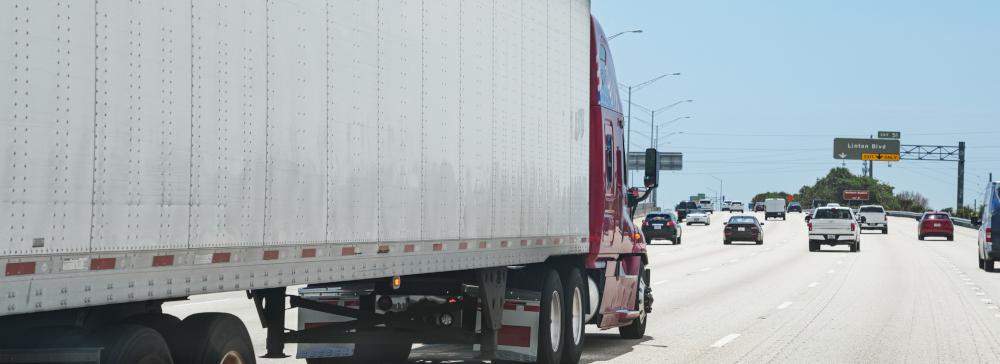
Unqualified truck drivers are not a rarity. In fact, a recent investigation found that 4% of commercial trucks on U.S. highways are operated drivers who don’t even possess commercial driver’s licenses (CDLs).
Consider how many trucks you encounter driving along the Katy Freeway in Houston, up 35E in Dallas, or on any busy highway in Texas. Nearly one in twenty of those trucks is operated by someone who is not qualified to be behind the wheel.
The danger unqualified drivers pose to the public does not rest with the drivers alone. It also falls on the trucking carriers that hire them and even the schools that purport to train them.
Texas public officials have begun to investigate and take legal action against trucking schools suspected of disregarding driver qualification requirements. Preliminary findings suggest that these schools, sometimes referred to as “CDL Mills,” may have circumvented training and testing requirements, allowing inadequately trained drivers to obtain commercial driving credentials.
When an unqualified truck driver causes an injury or death on Texas roads, it is important to identify all parties who played a role in allowing the driver behind the wheel to hold careless and unscrupulous parties accountable for creating this roadway hazard and to help accident victims pursue all available sources of compensation.
What Do Federal Regulations Say About Truck Driver Qualifications?

The Federal Motor Carrier Safety Administration (FMCSA) imposes strict standards regarding the qualifications of commercial vehicle operators. Qualification criteria that may come into play in a truck accident injury claim include:
Basic Eligibility Requirements
In order to meet the baseline qualifications set forth by the FMCSA, a truck driver must be at least 21 years old, be able to read, speak and understand English, and be in good enough mental and physical condition to operate the specific vehicle they are going to drive.
Licensing and Testing
Truck drivers must possess a valid CDL issued by only one state and pass a road test that demonstrates their ability to safely operate the type of commercial motor vehicle they will be driving.
The trucking carrier must verify the driver’s qualifications prior to allowing that driver to operate a truck on the road. This verification entails reviewing the driver’s qualifications and experience, and either administering a road test or obtaining and evaluating acceptable documentation showing the driver has successfully completed an equivalent test.
Medical and Physical Fitness
Truck drivers must be healthy enough to safely meet the demands of operating a large commercial truck on the highway. To meet this qualification, they must:
- Pass a Department of Transportation (DOT) physical conducted by a certified medical examiner
- Pass tests confirming healthy vision, hearing, blood pressure and overall medical condition
- Suffer from no disqualifying impairments that may lead to loss of consciousness or impaired ability to drive
- Be in possession of a current Medical Examiner’s Certificate (MEC)
When a trucking company fails to ensure its drivers meet applicable medical and physical qualification standards, the risk of serious collisions increases significantly. In many cases, a truck accident in Texas can be linked to a driver’s undisclosed medical condition, expired certification, or failure to satisfy federal safety requirements.
Background Checks and Safety History
Truck drivers must complete a detailed employment application before being hired by a motor carrier. Federal regulations require trucking companies to conduct a thorough review of each applicant’s background, including prior employment in commercial driving, driving history, and overall safety performance.
This process is intended to identify patterns of unsafe behavior and other red flags that may indicate a driver is not fit to operate a commercial motor vehicle. By properly evaluating this information, carriers are expected to reduce the risk of placing unsafe or unqualified drivers on the road.
Driver Qualification File
Federal regulations require motor carriers to maintain a FMCSA Driver Qualification File (DQF) for each truck driver under their employ. This file typically contains information such as:
- The driver’s employment application
- Driving record information
- Medical certification
- Road test documentation
- Other records demonstrating compliance with federal qualification standards
When the DQF has missing or incomplete information, it may indicate the trucking company failed to properly screen the candidate before hiring them.
Disqualifications and Prohibited Drivers
Certain violations and conditions may disqualify a person from operating a commercial motor vehicle, including:
- Serious traffic offenses
- Driving under the influence of alcohol or drugs
- Leaving the scene of an accident
- Other conduct that demonstrates an inability to safely operate a commercial vehicle
When a trucking company knowingly hires or retains a disqualified driver, it may be held responsible for the harm that results if that driver goes on to cause a truck accident in Texas.
Linking Truck Driver Qualification Violations to Accident Injuries

As an accident victim, a truck driver’s qualifications (or lack thereof) are only academic, unless they can be used to successfully advance your personal injury claim.
At D. Miller & Associates, we draw upon our deep knowledge of FMCSA regulations to tie driver qualification violations to the injuries our clients have suffered by:
Identifying Qualification Violations
The first step is determining whether the driver or trucking company violated applicable federal or state qualification requirements. This may involve reviewing driver qualification files, medical certifications, employment records, training documentation, and other evidence that may reveal record falsification or negligent hiring practices.
Establishing a Connection to the Crash
A regulatory violation alone does not necessarily establish liability. It is important to show how the driver’s lack of qualifications, training, experience, or fitness contributed to the accident and resulting injuries.
Investigating the Trucking Company’s Conduct
In many cases, the trucking company may share responsibility for hiring, retaining, or allowing an unqualified driver to operate a commercial vehicle. Evidence that a trucking carrier failed to properly screen drivers before hiring them, or turned a blind eye to dangerous conduct, may strengthen an injury claim.
Proving Damages
Even when a qualification violation is clear, an injury victim must still prove they suffered material losses due to the violation in question by providing evidence such as:
- Medical records demonstrating the injuries you have suffered due to the driver qualification violation and resulting accident
- Employment records showing you have been forced to miss work
- Expert testimony showing the extent of your physical, financial, or vocational losses and their connection to the accident
- Other evidence demonstrating the economic and non-economic damages caused by the collision, including pain and suffering, disability, and reduced quality of life
By thoroughly assessing all of the ways in which this violation has impacted you, a truck accident lawyer can help ensure you have the financial resources you need to pay your bills and move forward with your life after suffering a serious truck accident injury.
Preserving Critical Evidence
Trucking companies often possess records that are essential to proving qualification violations. Prompt action can help preserve driver files, training records, electronic data, and other evidence before it is lost or destroyed.
Turn to a Leader in Texas Truck Accident Injury Claims

At D. Miller & Associates, we are passionate advocates for people who have been injured by unqualified truck drivers and other kinds of negligence on Texas roads.
If you or a loved one has been injured in a truck accident and you believe the negligence of a truck driver or trucking company played a role, we are here for you.
Contact us today to schedule your free legal consultation with an experienced attorney who is familiar with driver qualification violations and how they contribute to truck accidents in Texas.